

Dear Friends,
I’ve been reading a lot about the US invasion/operation/strike in Venezuela that led to the capture and arrest of President Nicolas Maduro. I learned things from the perspectives and/or reporting of Gabe Fleisher, John Yoo, Gil Guerra, Calen Razor, Ben Geman, Missy Ryan and Ashley Parker, Ian Ward, Hans Nichols, Anne Applebaum, Punchbowl, Politico, Noah Rothman, Brookings, Chris Cameron, John Dickerson, Jonathan Bernstein, Richard Hanania, Jamie Dupree, Elizabeth Saunders, James Fallows, Bloomberg, Jack Goldsmith, Julia Azari, Dan Drezner, Nate Silver, Ezra Klein, David French, and many more.
I’m still having trouble wrapping my head around all of this. Here are some things I’ve been thinking about, grouped by topic.
Legal vs. Political
The entire substantive debate over the formal legality of presidential war1 annoys me. As I wrote during Syria in 2018, war is a political issue, not a legal one. No court is going to adjudicate this, much less constrain a president from acting.2 And that’s a good thing.
That said, arguments about the “legality” of a war—before or after an action—serve an important political purpose: influencing public opinion. And they can be effective. Presidents seek congressional approval—formal or informal—for military operations because elite consensus strengthens foreign policy legitimacy. Conversely, elite dissent signals the public to be wary.
Presidents—even, yes, Trump—worry about popular opinion. And while voters mostly don’t care about foreign policy, when they do turn against military action, presidential approval ratings plummet. Trump will never face a ballot again, but when a president is unpopular, other political actors find it easy to challenge them and thwart their policy and political goals.
Beyond rhetorical arguments about legitimacy designed to influence public opinion, political actors adjudicate control over the war power by using their authorities to assert power and constrain other political actors. The president can order military strikes. Congress can fund or not fund the military. The president can veto or sign such funding limitations. Congress can pass or not pass authorizations or restrictions. The president can abide by them or not. Congress can impeach and remove him.
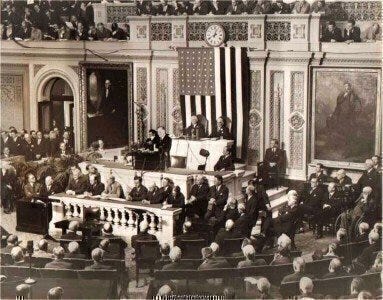
FDR at Congress on December 8, 1941 We often end up where we are—the president conducting a limited operation—precisely because of the constraints of elite and public opinion, coupled with the threat of formal congressional action. It sometimes seems like a president is acting purely unilaterally, but in practice Trump’s (or Obama’s) options are hemmed in. You just aren’t going to get an Iraq 2003-type of invasion on zero congressional approval, much less notification.
In the long-term, the presidency has accumulated more war power. That’s obvious. Presidents have direct incentives to care about institutional power; Congress has a collective action problem, the cross-pressure of individual substantive goals, and a risk-averse tendency to shirk responsibility. And partisans talk a good game about separation of powers when they are out of power, but ultimately just want to occupy the White House, not constrain it.
And it compounds. I liked Jack Goldsmith’s legal assessment about the invasion not because it matters much, but because he nicely lays bare how the executive compiles precedents via dubious actions and then uses them to justify future dubious actions. Just like with the spending power. Pretty soon, voters either like or accept presidential control, and that weakens the ability of Congress to fight back.
Congressional Involvement
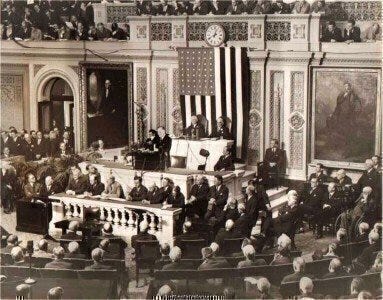
The administration did not notify congressional leaders ahead of time about the operation, much less seek chamber-wide authorization. The former was probably a political mistake. Their logic—at least according to Secretary Rubio—seems to be a worry about leaks, which is of course also a worry about pushback and opposition. The immediate trade-off is that you risk greater elite and public backlash, post-hoc. I mean, I’d be pissed off, and I think the various leaders are too.
I must confess, I don’t actually think Congress is out to lunch here. They aren’t doing what I’d ideally like—formally constraining the administration with limitation provisions in appropriations bills prohibiting funding for certain military activities, or barring military activities under the war powers resolution—but that’s mostly because they disagree with me substantively, not because they aren’t paying attention or acting.
To wit: The Senate took up a measure to specifically limit administration war powers action in Venezuela, and it failed 49-51 to be discharged. Ditto with a measure related to Iran, 47-53. The House rejected a similar measure about Venezuela, 210-216. The Senate is going to vote again Thursday on another Venezuela measure. It will also probably fail. You can lament it—I certainly do—but while Congress hasn’t affirmatively approved Trump’s actions, they have affirmatively rejected constraining them.
Now, might we be better off living in a world where the president has to come to Congress and get prior approval for these things? I think so. But as I wrote on my new blog(!) this weekend, that ship completely sailed out of the harbor after WW2. Congress does vote each year—at least once, and arguably twice— about presidential war power, when they annually fund the most powerful standing military in history.
So one story here is a capacity issue. Prior to WW2, the occasional military buildups were routinely drawn down to almost-laughably small levels. The president couldn’t undertake too much adventurism, because the army more or less didn’t exist. Congress didn’t become weak-kneed in the 20th century; instead, the world changed and Congress decided we need a huge standing military to deal with the speed of a potential WW3. Once that capacity existed, an almost inevitable side effect is small-scale adventurism.
It’s not particularly difficult to dictate how the money for our stunning military is used. Congress does it all the time. The NDAA passed this year demands that the administration not alter the troop levels in certain countries. The appropriations bills routinely contain all sorts of limitation amendments barring things. And Members are preparing amendments to the DoD appropriations bill to bar funds being used for further adventurism. They probably won’t pass. But that’s Congress substantively rejecting something, not sitting on their hands.
There’s a partisan argument of the form this is idiotic, Matt, of course the issue is that the Republicans in Congress are lackeys for Trump and would never constrain him. I don’t really buy it. Democrats, in this sense, don’t constrain Democratic presidents any better. This is a story of long-term institutional change, which has been partly one of legislative atrophy, partly one of legislative shirking of responsibility, and partly a byproduct of a legislature responsibly responding to changing time by augmenting the executive.
Separation of Powers and War Decision-Making
Confession: it makes me uncomfortable when people talk about war powers and discuss the Founders’ intent or the original meaning of the constitution. I don’t think appeals to either of those things make sense, on their own terms, as a rationale for the distribution of war powers in the 21st century.
That said, I am generally a believer in a large/greater congressional role in these decisions, chiefly for three reasons:
Legislatures are generally more conservative about war than executives;
Legislative involvement creates broader public consideration; and
Consensus war is more likely to be successful.
Note that none of this is an appeal to law or Founders' intent, though much of the 1787 reasoning for arranging war powers they way they did rests on similar beliefs drawn from their experiences. And the rule of law is obviously important, and we want it upheld, but it's a very abstract idea in any individual case of potential warmaking. For me, the substantive advantages of consulting Congress are the real value of the system.
Trump’s Foreign Policy, Substance and Process
This issue of process creates substance carries over to the administration. One striking thing about the Trump presidencies has been how much decision-making has been centered in the White House and close cabinet, rather than through the classic interagency process put in place in the wake of the buildup of the modern presidency in the 1930s. It was wild when they wrote the original travel ban in 2017 without consulting the relevant implementing agencies, and it’s wild now to see such bureaucratic freelancing.
Again, this isn’t process for process’s sake. The reason the executive branch mechanisms for this stuff are in place are because it works better. The White House—any White House—just doesn’t know much. And it misses all sorts of unknown unknowns. The reason you work through the various agencies and actors is because they can alert you to policy and political problems en route. It’s tempting to bypass them—just like Congress, they leak and push back and all the rest—but you risk a worse policy and less buy-in when you do.
And, of course, the immediate mission itself was a stunning display of effective US planning and execution. But it has become plainly obvious in the wake of the operation that there’s no consensus administration plan for what comes next in Venezuela? and quite possibly an ongoing struggle inside the administration over the answer to that question. Somehow, the Secretary of State, the Secretary of Defense, the president, and the White House Press Secretary didn’t seem to have a coordinated policy position on that coming out of the operation.
Now, every White House has a tendency to want to centralize decision-making in-house. You have true loyalists in the politicos there, uncompromised by agency-capture or the compromises of Senate confirmation. But Trump is extreme on this dimension. Shoot from the hip, go with your gut, and hope for the best. He’s the only president of my lifetime who seems to truly fit the personalist regime moniker, where the best laid plans may come crashing down on a whim.
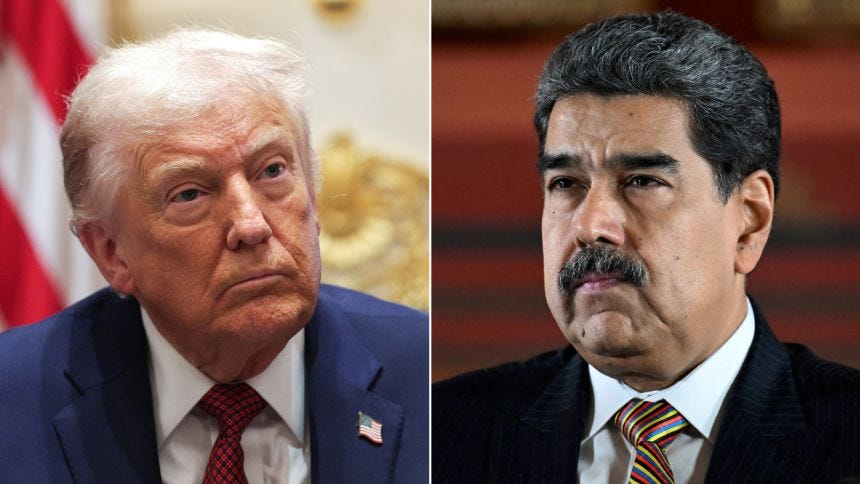
This is related but not quite the same as saying Trump is an authoritarian or a dictator or whatever else you hear on MSNBC. Because, again, this is a question of wisdom rather than law. Bush and Clinton and Biden had essentially the same theoretical free hand in internal executive-branch decision-making. But they adhered to the traditional process because, on average, it works better. Even as it annoyed the hell out of them and constrained them.
This circles back to one of the most striking things about the ongoing US actions with Venezuela—how little effort the administration put into convincing anyone about the importance of the mission, or the nature of the problem itself. Not the public, not Congress, not even the rest of the administration itself. No one seems to have a real sense of the larger what or why. This is complete political malpractice, and seems surely related to the ongoing soft public numbers for the policy. I wish I was surprised.
None of this is to say that things will go poorly, and I’m certainly not saying the mission was a bad idea. Maduro was a brutal dictator and I’m glad he’s gone, and I hope this all goes well and it very well might. But the nature of personalist leaders is to miss risks and cause unnecessary fuckups. Those are all possible too under the best of executive processes. But this is a percentage game, and you want to play the percentages.
I disagree with the notion that there’s no Trump doctrine. It seems more or less obvious to me that Trump: (1) views the world as led by great powers led by great leaders; (2) great powers need to be respected; (3) lesser powers can and should be exploited, and if you instead ally with them you are a sucker missing an opportunity and not a great leader; (4) everything is zero sum. This leads to a basic foreign policy of (1) unwinding American international commitment with weak powers; (2) expanding our influence locally in the western Hemisphere; and (3) staying out of the way of other great powers in their spheres of influence.
Read this piece by Elizabeth Saunders. One upshot of this doctrine is that the post-war global order is rapidly fading, and what comes to replace it is fully unknowable.
That said, I don’t think Trump’s Venezuela actions are themselves going to tempt other great powers to make similar moves. I saw a lot of people saying “well, now the US will have no leg to stand on if China takes Taiwan” and that just seems like nonsense to me. It has never been the moral high ground that has prevented China from taking Taiwan, it has been the threat of the US military protecting it. That could change, of course, but right now it hasn’t.3
I have no idea why Trump wanted to do this. Drugs. Oil. Migrants. China. Just Flexing Power. It’s all possible. But how the administration thinks—and talks—about this going forward will not just be a past-tense clue as to why it was done, but all a building block of how this is thought about going forward. Which makes it all the more striking that one plausible reason has been so absent from the discussion: democracy.
And that’s surprising, not only because Venezuela is actually a good candidate for plausible successful regime change toward democracy, but because a stable democratic Venezuela would be a huge help to US interests with regard to all of the other plausible goals.
Cheers,
Matt
Or whatever you want to call this: attack/operation/mission/arrest. I don’t think the terminology is all that important, given that I don’t think the legal issue is all that important.
Area Congressman Annoyed That Courts Won't Grant Him Standing To Argue President's War Unconstitutional is more or less a 50-year running Onion headline at this point.
And if it was the moral high ground that restrains China, we still retain most of it, in that Taiwan is a liberal democracy and Venezuela was/is an illiberal dictatorship.
“Which makes it all the more striking that one plausible reason has been so absent from the discussion: democracy“
You’ve put your finger on something that has been bugging me too. While I don’t think “democracy” is a good enough reason to justify this aggressive of US military action, I also think it’s by far the *best* reason. Maduro has absolutely no legitimate claim to leadership of a nominally (and only nominally these days) democratic country, Venezuelans themselves clearly wanted him gone, and many (though it’s hard to tell how many) are very happy with the actions the US took. It’s why I’m happy Maduro is gone, even as I’m very concerned about how we got there.
So it’s confusing why this is not how the Trump Administration is framing the issue, even if just rhetorically…until you remember that Trump himself unsuccessfully tried to do in 2020 what Maduro successfully did in 2024: stay in power after losing an election. I just don’t believe Trump thinks that’s a bad thing, and so he’s certainly not going to use it as justification for his actions against Maduro, even if he could maybe use it to win over some people who care deeply about democracy and human rights.
"I disagree with the notion that there’s no Trump doctrine. It seems more or less obvious to me that Trump: (1) views the world as led by great powers led by great leaders; (2) great powers need to be respected; (3) lesser powers can and should be exploited, and if you instead ally with them you are a sucker missing an opportunity and not a great leader; (4) everything is zero sum. This leads to a basic foreign policy of (1) unwinding American international commitment with weak powers; (2) expanding our influence locally in the western Hemisphere; and (3) staying out of the way of other great powers in their spheres of influence."
Well put. More succinct and accurate, imho, than any description of the "Trump doctrine" I've seen in a mainstream outlet.