

Dear Friends,
Here are thirty-six thoughts on American politics. I have aimed for succinctness, with links to the backstory over extended-explanation.
Gerrymandering. You’ve probably seen the stories from Texas and California. In one sense, this is the triumph of hardball politics and smart game-playing. Push the rules to the natural limit game and gain every edge you can. This isn’t norm-breaking per se; the norm has always been to screw the other side. This is just pushing the existing norm to the limit, by redistricting mid-decade, which is the actual new innovation.
The long-run equilibrium, of course, is probably close to a net wash, with the negative side effect of representation even less reflective of underlying state populations. Not great. It remains true that there are more Republicans in California than in any other state save Texas and Florida, and more Democrats in Texas than in any state but California. Right now, Massachusetts is the worst place by some logic; Trump got 36% of the vote, but Republicans have zero of the nine congressional seats. Redistricting hardball is going to make more states look more like that.

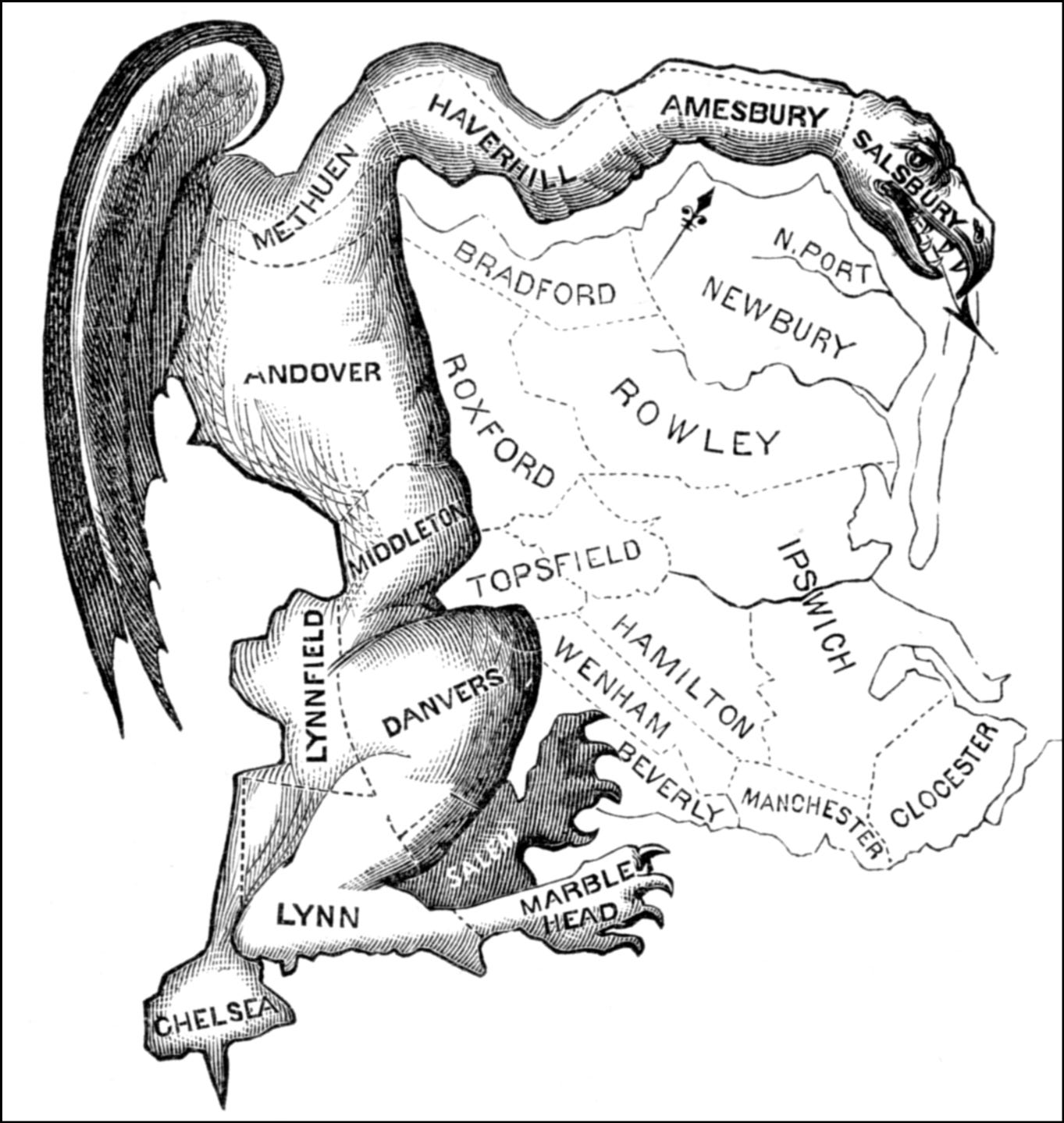
The famous 1812 cartoon of the Massachusetts gerrymander The obvious normative solution is to junk our geographic single-member districts that are a relic of Anglo-American democratic theory from a past age and adopt something like single-transferable vote proportional representation. That would allow Massachusetts Republicans, for example, to get themselves a reasonable share of their state’s nine House seats, probably three. I’d normally say don’t hold your breath—and don’t hold your breath, US electoral change is a slow-moving boat—but hardball sometimes has the effect of backlash into constitutional change (see, e.g. the 22nd amendment).
In another sense, however, what we are really seeing here is the triumph of party and partisan nationalization. Parties don’t exist as entities that can see or do things purposefully; they are collections of individuals and groups. And often the goals of the collective party are at odds with the goals of many of the individuals. Like Obamacare. As a collective, the party would gladly trade 30 House seats for two or three cycles in order to get national health care. Individual members, of course, will support this as long as it’s not their seat that gets axed.
Traditionally, this has been one of the brakes on hardball gerrymandering. It’s good for the collective party, but bad for the individual elected officials, who necessarily have to see their own seats become less safe in order to create the additional new ones. In fact, many states have or have had incumbent gerrymanders, where the parties collude to create safe seats for everybody, rather than push partisan advantage. Right now, we’re seeing some whining from blue-state GOP reps and red-state Dems, of course. But once upon a time, an important objector to this gambit would have been CA Dems and TX Republicans who didn’t want their margins to go from, say, 62% to 54%. We can come up with lots of explanations for this, but they all lead back to the strengthening of partisanship in the electorate and the nationalization of parties.
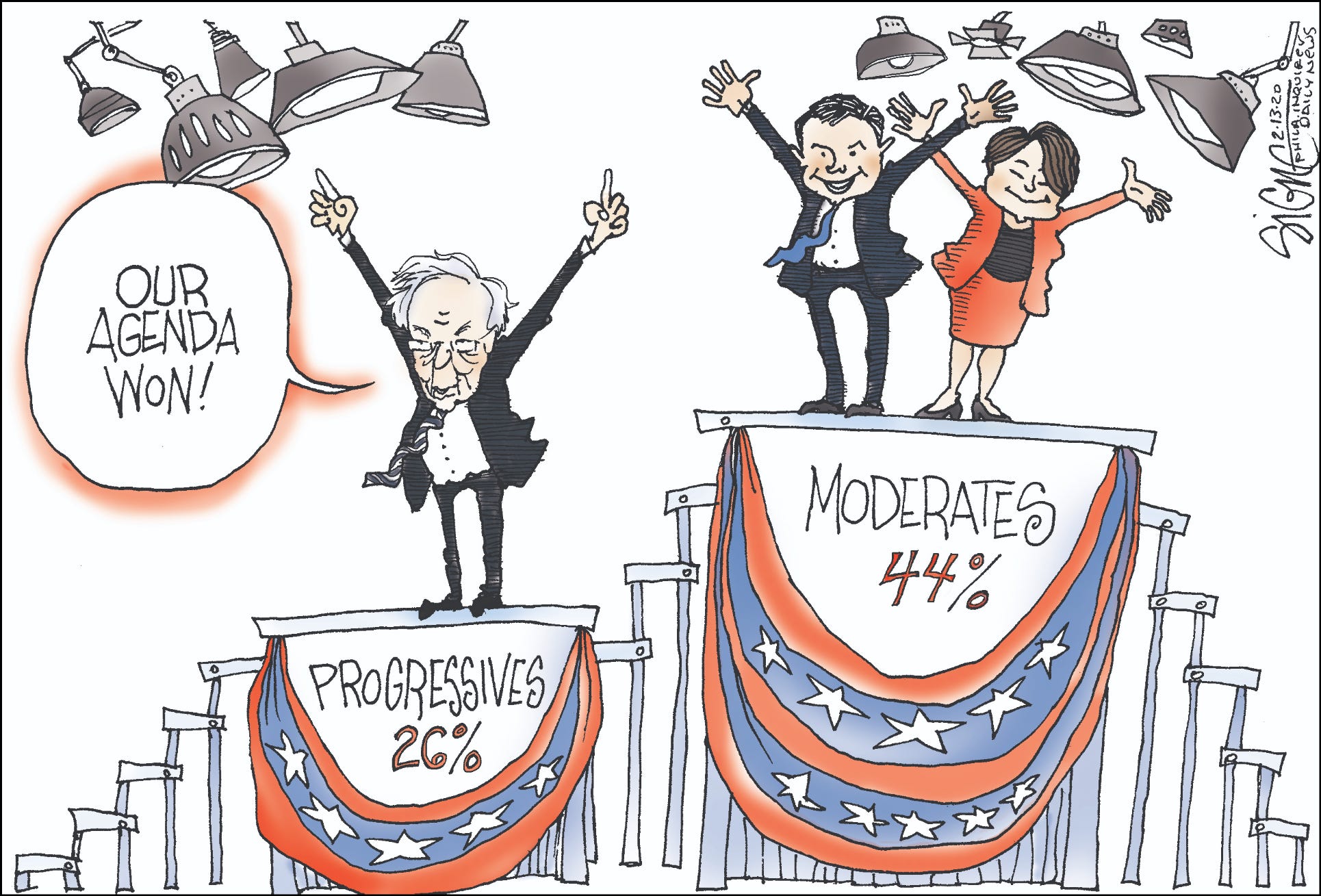
Moderates. There’s been an old-school 2010s blog war this week about whether moderate candidates overperform, and whether moderating your views can improve your electoral chances. The longstanding answer from traditional political science is yes. Moderates gain a small but real (something like 2-5%) vote share advantage. That’s a big help in contemporary swing elections! And a whole bunch of centrist types on the Dem side consistently push for moderating strategies. But a variety of progressive-friendly analysts and writers disagree, and they are out in force. Go read it all if you are interested.
I thought two things were missing from the discussions I encountered. The first is that I think a lot of progressives (and their analogues on the far right) are making an implicit expected value calculation when they chafe against moderates and moderation. That is, they will take a modestly reduced chance of winning because they perceive the payoff of winning with progressive candidates to be so much higher. They don’t care that Joe Manchin or Krysten Sinema or whoever improves their chances of winning the Senate, because the policy value of Joe Manchin being the median Senate vote isn’t worth much to them. They’d rather take a smaller chance of winning but have the median Senator be progressive-friendly when they do win. I think you saw some of this with the House Dems after 2010; instead of trying to recapture the southern democratic seats by moving the party toward Heath Shuler or whatever, they aimed to build a progressive majority, so that when they did finally get control in 2019, they had a majority that was pro-choice and anti-gun, which wasn’t true from 2007-2010.

Second, and related: moderate and moderation have several different meanings, especially in legislative politics. Moderation can be—and is often thought of as— issue positions taken by swing district members, like Don Bacon or Jared Golden. But it can also mean a person who looks to compromise and is willing to take half a loaf, rather than digging in and not cutting deals. These two things are positively correlated, but it’s far from perfect. Plenty of Members from very liberal and very conservative districts have the temperament of getting to yes; the easiest place to see this is in appropriations, where deals have to be cut and so you end up with people like Tom Cole, well, cutting deals. Tom Cole is not from a swing district. But he’s often serving the politics of moderation in the House.
The other thing about the moderation debate is the party brand. And again, this is about “seeing” like a party, something that can’t actually be done because you are dealing with a collection of individuals. Ultra-popular “wrong” party governors like Larry Hogan (MD) and Charlie Baker (MA) and Phil Scott (VT) seem like natural Senate candidates since they are proven statewide winners and have personal brands that overcome partisanship in their states in truly incredible ways. But even though these types overperform in Senate elections, they tend to lose, because voters (correctly, IMO) assume they will support their national party in the Senate most of the time. Their state-tailored positions that make them so popular back home will be shed as they serve in national office and support a national party machine. So unless the national party itself moderates, otherwise-strong moderate candidates still face a headwind. And so, in some sense, it’s not good enough for Dems to run a North Dakota moderate in North Dakota. If they want to win there, the national party has to move toward North Dakota politics.
And all of this brings us to the Senate map. I’ve had enough of Democrats whining about the structural advantage the GOP has in the Senate. It’s all more or less true and it all more or less doesn’t matter. This isn’t a gerrymandering situation; the lines are fixed and known! If your party isn’t winning enough seats, the utterly obvious game theory response is to adjust your party positions and agenda to win more seats. Does it suck to have to compromise your deeply held progressive or conservative values in order to win elections? Sure. But if your goal is to win elections, you don’t really have another choice. You can just say “I don’t like guns, but I’d rather win elections so I can do health care and education and other stuff people care about, so we should give up on guns.” And you can mean it. That’s the second type of moderation from above: going for half a loaf rather than holding out. And it’s also the opposite of my hypothesized expected value play I see from a lot of progressives. Which is fine! You can wait around until you build the progressive majority. But don’t complain about the Senate map if you are explicitly against trying to maximize your chances on it.
Of course, part of the problem is—I hope you are sensing a theme here—parties are collections of individuals and groups. No one can singularly steer a party toward national moderation, and even if you could direct that from the top, you would just blow up the underlying coalition. So this will always be a struggle. Especially for the out-party to the presidency; the president’s party has a nice advantage in that they do have something of a coordinating figure (I don’t want to overstate this, the causality is often backwards) who can try to enforce national direction. And parties change/evolve all the time! But it’s messy and involves a million different groups struggling to pursue a million different agendas. That friction prevents the party from nimbly adopting game theory optimal electoral strategies; factional power in the power is important and internal party struggles will often produce suboptimal national outcomes. That’s not new, and it’s not going to change.
I spent much of the summer very depressed about the political conversations I was having with friends and family. Almost every overt “let’s talk about politics” conversation was genuinely awful. I’ve spent a lot of time trying to figure out why, and my basic takeaway is threefold. First, partisanship has just melted peoples’ brains. Completely. I think a lot about this Jonah Goldberg article on banana republic politics. I’m definitely biased here, because I don’t have strong partisan attachments and I like to talk about policy more than elections or whatever. But I had people telling me that the Big Beautiful Bill is the worst bill in American history and other people telling me that if it doesn’t pass, the republic is over and neither of these sets of people could even tell me much about what was in the bill. The anger I got from people when I wanted to talk about policy details was incredible.1
This came to a head in a discussion of energy policy. A bunch of liberals were telling me that BBB was terrible because it undoes incentives for renewables (true) and that we need to be creating more energy, not less (also true, IMO!). I gave them my usual wonky pitch for an all-sources American energy strategy and told them that I agreed with them about the renewables policy but that I did like how BBB opens up more oil and gas drilling by reversing Biden-era restrictions. That I was happy that oil production in the US hit record highs under Biden, but that we could do a lot more still, and that we should do a lot more. On all fronts. I honestly thought I was mostly agreeing with them. And they fucking lost it on me. That it wasn’t true. I was a scummy Republican. I was supporting the end of democracy. The whole game is rigged. And so on.
Second, it’s shocking to me the number of people who now routinely say things they transparently don’t believe when speaking in private conversations among friends. I’ve been complaining about this for years, but it’s far worse than ever now in my world. I used to think people were just parroting talking points they heard on TV or whatever, not realizing that those same public officials don’t talk that way in private. But now I feel like part of this is the performative culture of social media, and people have just become the political character they play on Facebook or whatever and can’t turn it off. Maybe people are just trolling when they say things like “I hope Trump gets assassinated” or “well, there isn’t going to be an election in 2026” or “the majority of liberals would rather live in Europe.” But then again why the fuck are you trolling me in a private conversation on my porch?
One thing I think all these people have forgotten is that Americans mostly agree about public policy. The entire structure of democracy and elections and parties tends to mask it, but I’m confident that a supermajority of Americans agree on a supermajority of the public policy space. The illusion is that we have huge disagreements about everything because we only fight about the things we disagree about. Picture the entire terrain of public policy as a huge square. And the entire policy agenda takes place in a small corner of it, because 80% of the square isn’t in dispute, except by people who are huge outliers on public opinion. Should we have public schools? Should they be compulsory? Should we have roads and public parks? Should people need a license to drive a car? Should we regulate drinking and driving? Speed limits? Should we have residential and commercial zoning? Noise ordinances? Free exercise of religion? A competitive free market for groceries but not heroin? You can say “Matt, these are things we all agree on. Come on, bro.” But that’s the point!
Even within controversial areas, we mostly agree. Take taxes and spending. I’m confident that a supermajority of Americans agree that the federal government should use a graduated income tax to raise general revenue to pay for a military and a payroll tax to provide health care and social insurance to seniors. Well, folks, that’s like 73% of all federal spending right there. Fight all you want about what Medicare does and doesn’t cover and about whether the graduation on the income tax should cap out at 35% or 39%, or 42% and whether we should spend $780B or $940B on the military, but just remember that the fights are within the context of broad agreement among, well, everyone.
Which is just to say you should think twice before you label another American your enemy who needs to be vanquished. You mostly agree with them. You mostly agree with Trump. And you mostly agree with Biden. And that’s because Biden and Trump mostly agree.
This is not to say that the issues we do fight over aren’t important, or that any individual issue of profound disagreement doesn’t override broad agreement elsewhere. Slavery is the premier example of this. There is a heartbreaking line in a Confederate textbook for schoolchildren that describes citizens of the United States (their new foreign neighbors to the North, as they saw it) as an “ingenious and enterprising people…refined and intelligent on all subjects but that of negro slavery, on that they are mad.” So it’s not unreasonable to think that immigration or civil rights or even the marginal tax rate are important enough moral causes to override general agreement, but you should be specific in that belief, IMO, rather than reducing your opponents to pure evil across all subjects.
The weirdest part of all this was that anytime a public policy issue came up organically (as opposed to “let’s talk about politics), none of what I described above occurred. Part of this, I think, is that organic political discussions tend to more naturally crop up around local issues—stuff at the schools, or even hyper-local stuff like what’s going on at the church—and those tend to be less affected by partisan brain-rot. But even when a national issue came up, as long as it came up in passing, things went great! I had an incredible conversation about campus free speech codes that naturally arose from a Thing Going on Locally. I have theories about the nature of all this, but nothing solid.
DC police federalization. I’m with a great many center-left and center-right folks on this one. DC has a real crime and disorder problem. It has been ill-addressed. It should be fixed. But Trump’s current policy is bad. Federalizing the Metropolitan Police is not per se a bad move, but it’s also not a strategy. Pulling FBI and DEA folks off other assignments to walk beats in Georgetown is a bad strategy and a terrible allocation of resources. And putting National Guard troops on the mall with no arrest authority is obviously just temporary show-pony politics. If and when the administration sends a proposal to Congress for money or authority changes to improve public safety in DC long-term, I’m all for it and will applaud. Ditto if DC can improve things itself under home rule. But this current effort seems utterly temporary and show-horse.
That said, it’s good politics for Trump. Crime is a winning issue for the GOP, and a huge majority of Americans prefer the conservative, tougher-on-crime general policy approach. In terms of setting the agenda, this is a no-brainer for the administration to take on. And voters love to fight things out at the agenda level. But at the end of the day you still need a crime policy, and ideally once that reduces it over the long-haul. I don’t think the existing status quo in DC was getting the job done, but neither will this Trump gambit.
I would call putting dozens of FBI agents on the beat in Georgetown the silliest misallocation of policing/security resources I’ve seen this year, but Fairfax County Public Schools is installing metal detectors at my kids’ high school. And I fear it is for bad reasons: (1) security theater for jittery parents and risk-averse administrators; and (2) other high schools in the district have a legitimate problem with weapons coming to school, and the administration did not want to single them out, so they went with a blanket policy that covers schools with no reported problems at all. On the other hand, I am a big fan of the new cell phone policy—no phones, at all, except at lunch—so kudos to FCPS for that. On the other hand, the FCPS calendar continues to make no sense, just way too many 4-day weeks and unnecessary student holidays.
I’m increasingly convinced that conservative populism is very much an aesthetic, at least in regard to economics. Nationalists almost always end up being big-government socialists of a sort, but the degree to which self-identified economic and small-government conservatives will tolerate tax increases, spending increases, centralized planning, and crony capitalism so long as it codes correctly culturally is still striking. Yes, partisanship and hypocrisy and all that are involved here. But I’m still impressed.
I spent a week in a couple of different places in Colorado and it was awesome, of course. But it also reminded me what a weird and wonderful place the American west is, politically-speaking.

Rocky Mountain National Park This piece by Julia Azari is one of my favorite things I read all summer, because it really made me think about the world differently. The implicit thesis is that Trump practices a politics of power rather than a politics of legitimacy; and that Newsom is gaining traction right now specifically because he is bucking the liberal instinct and doing the same. Not great when you solve for the equilibrium.
Pocket rescissions. The Trump administration has played a lot of cat-and-mouse on the impoundment issue. They have emphatically not come out and defended impoundment on the merits in a courtroom, despite OMB director Vought obviously believing in it as a constitutional matter. But they have taken every opportunity to push the envelope. The latest is the possibility of them trying some so-called pocket rescissions, which would be the practice of using the presidential authority under the Impoundment Control Act (ICA) to propose some rescissions for Congress (which allows a president to impoundment funds for 45 until Congress make a determination) but do it with less than 45 days left in the fiscal year, so that the money expires before they are forced to release it at the end of the 45 days.
This would quite obviously be an illegal impoundment. GAO has consistently said so. An ordinary reading of the ICA says so. And the intent of the drafters of the ICA says so. It’s not really debatable, in my view. The question is how you stop it. Like many things, the clock works against the legislature here in the face of executive action; in theory, the Comptroller General can file a lawsuit to challenge a pocket rescission, but the courts would have to act really fast. Seems unlikely. Congress can always fix these things by amending legislation (or going hardball by cutting presidential funding to make the administration come around), but that’s not going to happen right now either. So public pressure from elected officials to stop the administration is the real ballgame. And unless you get that, we are likely going to get a lot of precedent-setting via gridlock and clock-runouts, almost all which will favor the executive.
A big problem here, in my view, is that no one can really define an impoundment. Or at least there’s a massive gray area. Unless you come out like Nixon and tell everyone to fuck off, it’s not obvious how to count stuff up. Money is leftover in accounts all the time at the end of year. If it’s because the administration achieved cost-savings as it met congressional intent, we applaud! If it’s because they tried to shutter a program they didn’t like, we call that unconstitutional. But it becomes largely a know-it-when-you-see-it game, where intent matters. I don’t question the discretion of the executive to cut specific contracts and pursue other contracts when the administration turns over. That’s not impoundment. But if you cut those contracts and don’t spend the money on new contracts with preferred policy strategies, that’s impoundment.
The bigger worry for me is that a pocket rescission is going to continue to upend the FY26 appropriations process, exacerbating the already-derailing move of the ICA rescission that went through previously this summer. For the first in modern history, it really feels like the Democrats might cause a shutdown. I’d still bet against it—it doesn’t match Dem philosophy at all, plus everyone knows that the people trying to leverage a shutdown almost always lose—but it’s a real possibility. And who knows how the administration will respond to such hardball. Go ahead and solve for that equilibrium.
Part of the conundrum here is the Impoundment Control Act itself. Dems were bitching about the administration proposing a rescission, because the ICA allows 50-vote Senate majorities to adopt those rescissions, which has the effect of undoing 60-vote Senate deals that produced them. And that makes it harder to bargain down the road, because why would the minority agree to a deal on appropriations if a majority can unilaterally undo it with a rescission?
The problem for any fan of congressional power, however, is that the ICA is the proper mechanism for the administration to be using here. If you are worried about impoundment and all the rest, you want presidents to be submitting ICA rescission requests for Congress to consider. It’s the legal way to do all of this. Which is a problem, because the legal way to do all this happens to also blow up the norm about how we do appropriations. Solve for that equilibrium.
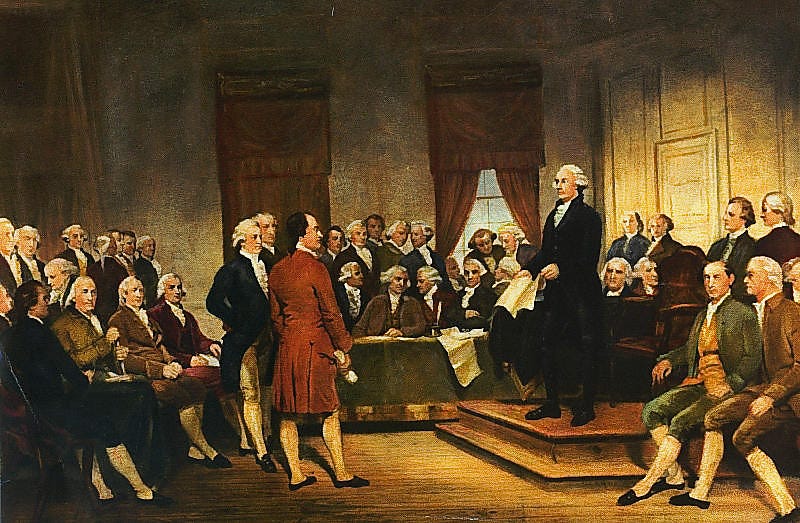
When thinking about presidential power, it’s worth remembering that our system of government is the one that is most monarch-like among the republics. It’s easy to tell yourself a story about the colonists rebelling against a monarchy and setting up a republic, but it’s harder to remember that they did this in the context of the 18th century, when there were basically no republics in existence and our present-day modern parliamentary systems would have scared the shit out of everyone. So they copied the English mixed-system of the 1700s, and purposefully built a king-like figure into the system. With significant powers—notably the veto—that the existing King of England at the time didn’t even have (the last royal veto in England was in 1708, long before our Founders were born).

This is important, in part, because it’s a reminder that our system is not a modern parliamentary system and not designed to behave like one. It has tons of veto points and messy governments filled with both parties and negotiations between the administration and congressional majority and all the rest. But it also means we have the system most likely to accrue durable executive power at the expense of the legislature, or to have personalist government come to the fore. Which is not a good thing.
I am not surprised DOGE failed as a mechanism for cutting federal spending. That was the easiest prediction of the year. It’s just hard to cut spending.
I love this blog post by Cate Hall (the format of which she got from her husband, who got it from Mari Andrew). I won’t do 50 things—God help you—but here are two things I know: first, you should host social events at your home. Card games, dinners, aimless-hangouts with neighbors. It’s a lost art and you will generate massive happiness returns for you and your friends. Second, you should go for walks. Both alone and with a friend. It will turn mental gears you didn’t know you had.
I watched four senior citizens play a bridge hand at the community center yesterday as I was passing by on the way to the gym. It was one of the worst-played bridge hands I’ve ever seen. Every bid was wrong. The contract ended at 1 spade when it should have gone to at least 4 spades and probably 6 spades for a slam. As the hands laid, there was a cold line to making 12 tricks for the slam, but the declarer played it about as dumb as possible and ended up making only 8 tricks. That scored 30 points below the line and 30 above, when it could have made 900+ had they bid and made the slam, which any serious players likely would have done. And at the end of the hand, everyone congratulated the declarer and both defenders shrugged, and they wrote down the score and moved on, all smiling. And I just walked away, because upsetting that sub-optimal equilibrium seemed incredibly bad.

Cheers!
Matt
One extremely refreshing exception to this was talking to my oldest nephew, who seemed genuinely interested in the consequences of the BBB across a whole range of policy areas.
This was great! I really appreciate that you took the time to post it on Substack instead of writing a 36-tweet thread that I would've had to log into X to read.
A friend of mine and I always end up talking about the "kernel of truth" at the center of most of the GOP's schemes, along with the ridiculous positions Democrats are sometimes forced to take because we have somehow decided that morality is defined as "the opposite of whatever Republicans are doing".
I can only really have those kinds of conversations with that one friend, though. Everyone else I know are good people who care deeply about justice, fairness, a good society, etc, but I think they're just too confident that they already know what's right and what's wrong.
Enjoyed this post. Thanks for sharing!